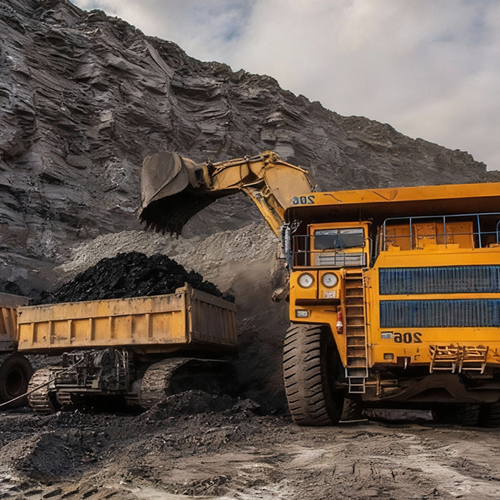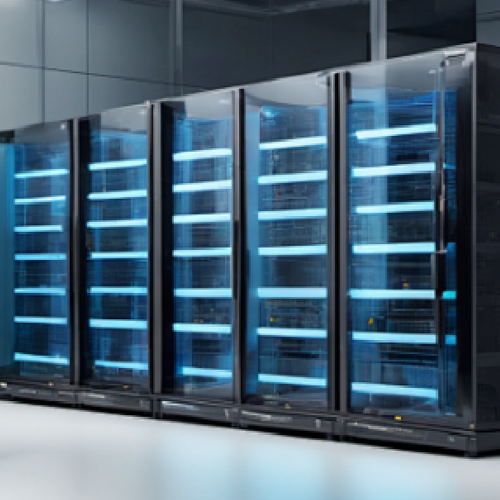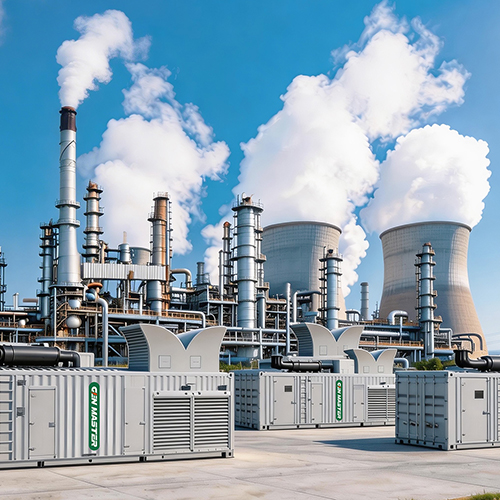


For data centers, large factories, and mines, a power outage is never a question of if, but when. However, what often leads to catastrophic consequences is not the blackout itself, but the failure of the standby generator set to take over stably and in time when loads suddenly shift or the grid fluctuates.
An unexpected voltage dip can cause server crashes in a data center, control logic failures in factory PLCs, or brake lock-up on mine hoists – the direct loss from a single incident can range from hundreds of thousands to millions of RMB, and recovery time is often measured in days. In such critical facilities, a standby generator set is not a "nice-to-have insurance", but the core infrastructure ensuring operational continuity.
|
|
COP is the power a generator set can deliver continuously under a constant load with no time limit, provided the average load factor does not exceed 70% per year. For mines or main factory lines requiring 24/7 uninterrupted power, COP is the baseline for determining whether a set can handle long-term operation. Selecting based only on short-term power ratings while ignoring COP can lead to overheating shutdowns after just a few hours of continuous running.
PRP allows a generator set to deliver about 10% more power than COP for up to 500 hours per year under variable loads. For emergency power scenarios in data centers (lasting from a few hours to tens of hours after a utility failure), PRP is the appropriate basis for sizing. However, any load that exceeds PRP will significantly shorten the insulation life of the generator windings.
This is the most underestimated parameter. When inductive loads (motors, compressors, conveyor drives) start, the instantaneous current can reach 3 to 7 times the rated current. If the generator set cannot provide enough "starting capacity", the result is often: generator output voltage drops → contactors release → motors fail to start → generator overcurrent protection trips.
Key insight: The overload capability of a generator set is far lower than that of a transformer. A transformer can withstand 35 times its instantaneous current, whereas a generator set typically handles only 1.5–2 times, and only for a matter of seconds. Therefore, motor starting inrush must be included in capacity calculations, not fixed afterwards.
Scenario:
A factory needs a standby generator to power multiple motor-driven loads. Normal operating total power is 800kW (diversity factor already considered). The largest motor has a rated power of 200kW, uses direct-on-line (DOL) starting, with a starting current multiplier of 3× (in reality, standard squirrel-cage motors have 5–7×; this is a conservative example).
Calculation steps:
Peak instantaneous demand during starting:
Largest motor starting power = 200kW × 3 = 600kW
Other loads running normally = 800kW – 200kW = 600kW
Total instantaneous demand (ignoring power factor differences, conservative estimate) = 600kW + 600kW = 1200kW
Generator capacity selection:
The generator’s PRP should be ≥ 1200kW × 1.2 (safety factor for voltage drop and waveform distortion) ≈ 1440kW
Also verify the transient voltage drop under the 1200kW surge (typically required ≤20%). High-performance sets recover within 25%; precision equipment scenarios require ≤15%.
Conclusion:
Simply selecting a 1000kW set based on 800kW → very high risk of failure.
Recommended configuration: One generator set (or two in parallel) with total PRP ≥ 1500kW.
If a soft starter (limiting starting current to ≤2×) or VFD is used, the above demand can be reduced to about 1000kW, cutting equipment investment by more than 30%. Always evaluate whether to optimize the starting method before sizing.
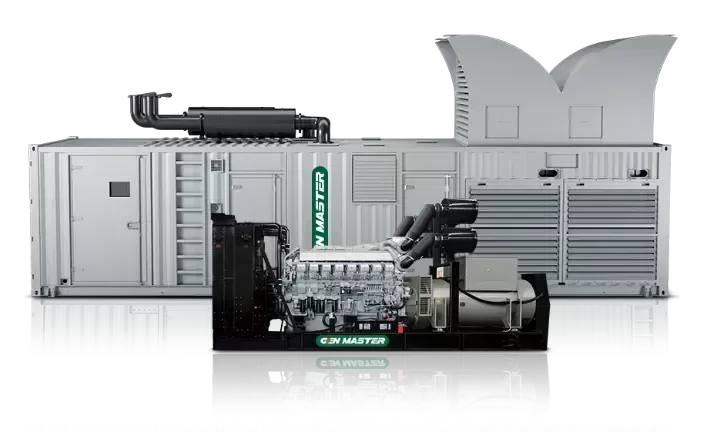
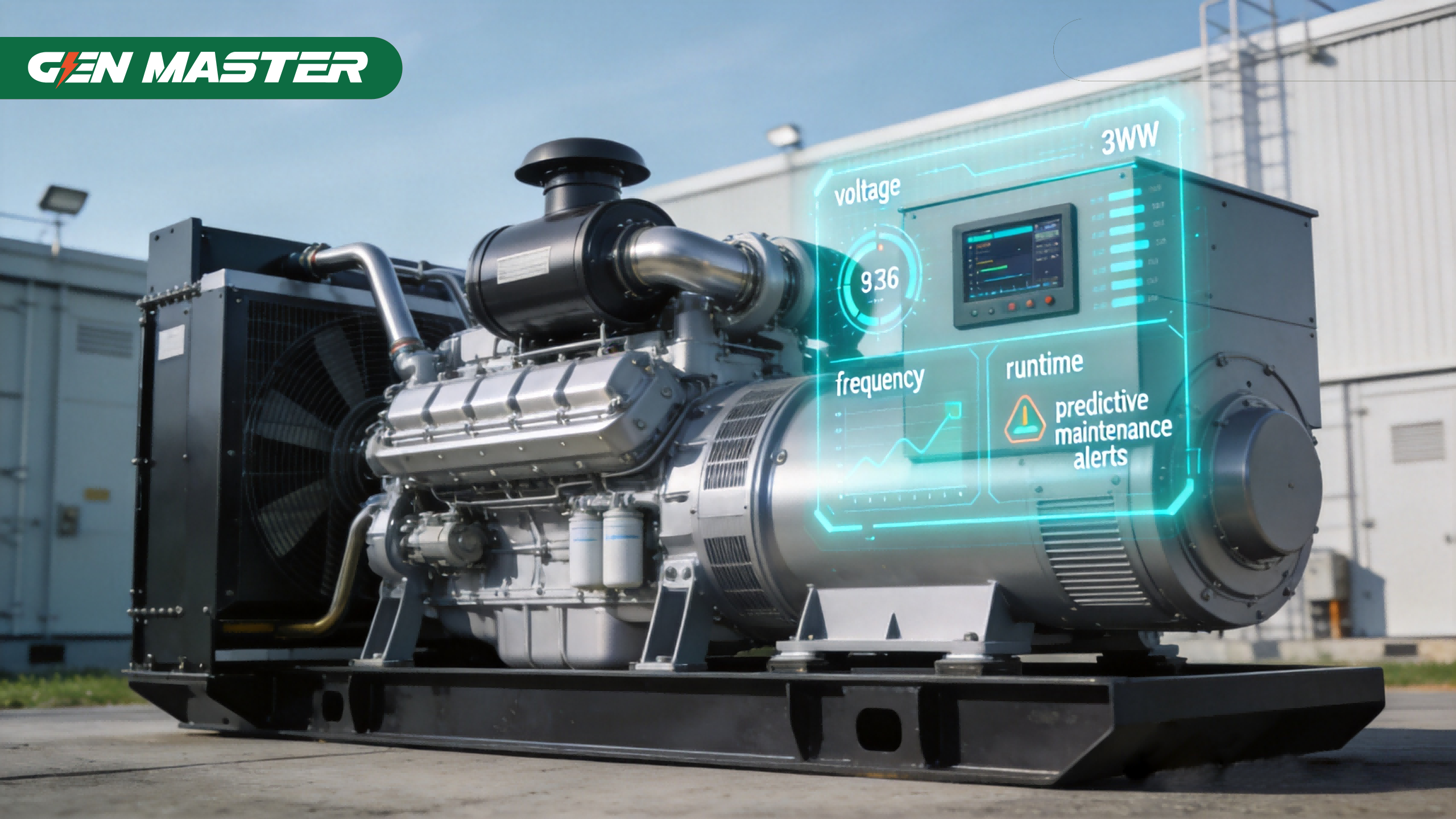
In the above calculation, you may have noticed three hidden challenges after meeting theoretical capacity: future expansion, sensitivity of critical loads, and high-temperature derating. GEN-MASTER POWER is designed precisely for these pain points:
l Parallel operation technology – easy expansion and redundancy
When a mine expands or a data center adds more racks, there’s no need to replace the main set. GEN-MASTER POWER uses standardized parallel control modules supporting automatic paralleling of up to multiple units, with load sharing proportional to capacity – meeting future expansion needs and enabling N+1 redundancy.
l Digital Voltage Regulator (DVR) – protects sensitive equipment
With conventional AVRs, voltage can dip by as much as 35% during motor starting. GEN-MASTER POWER’s DVR responds in<20ms, 15="" limiting="" transient="" voltage="" drop="" to="" within="">
l Industrial-grade cooling system – handles high ambient temperatures
The environment in mines and factory machine rooms often exceeds 40°C. Conventional sets must be derated under such conditions (losing 10–20% of power). GEN-MASTER POWER comes standard with an independent intercooler and large-capacity radiator, delivering full-rated output even at 50°C ambient – no additional derating calculation needed.
The power solution for every critical facility deserves a customized calculation. The example above is a simplified model – actual selection must also consider power factor correction, harmonic load effects, altitude derating, fuel system matching, and more than a dozen other parameters.
Click to visit our website https://www.genmaster-power.com/ and contact our application engineering team for one-on-one sizing advice.
GEN-MASTER POWER – Uninterrupted confidence for critical loads.
2026-07-14
2026-04-16
2026-07-14